Ir al contenido principal
international-mobility

The benefits of international experiences for students at the Lycée Français Molière

Let's face it, who doesn't like to travel and be with friends? What if you could combine both while learning and discovering the world in a real and accompanied way? That's exactly what we at the Lycée Français Molière achieve with our international mobility experiences for students. It's all advantages!

Benefits of international education for students

As we always say, in the Lycée Français Molière We believe that learning languages and academic content is very important, but it is not enough on its own. The real international experiences help our students to using what they learn in class in real-life contexts, They are able to communicate fluently outside school and understand other cultures in depth. This gives them a real advantage in today's world, and prepares them to be global citizens with critical thinking and autonomy. Some of the skills or advantages that our students acquire are the following:

Language skills and confidence in speaking

Study three languages in the classroom is a great foundation. But when students travel or participate in international projects, The students use French, English and Spanish as communication tools in everyday situations. This improves fluency, comprehension and confidence when speaking in contexts outside of school, something no book can fully replicate.

Personal development and autonomy

Exchange stays, mobility or activities away from home require students to make decisions, organise themselves and deal with minor difficulties. These experiences help them to gain self-confidence and autonomy, These competences will serve them both in their educational stage and in any future stage of their lives.

Cultural understanding and global mindset

When pupils live with peers from other countries or participate in joint projects with other schools they understand ways of thinking different from their own and learn to respect diverse perspectives. These situations give them a global mindset and teach them to communicate with respect for other cultures.

International experiences in our educational project

At Molière, international experiences are not isolated. They are frequent, they are part of the educational trajectory of each student and are integrated at different stages of development. From outings to nearby areas for a few days for the youngest children to more extensive mobility programmes in different countries and continents for weeks at a time.

  • We offer exchanges and educational stays with partner centres in France and other countries where students can live with local families and continue learning outside their usual environment.
  • We organise collaborative projects and international activities which complement what is learnt in class, reinforcing motivation for languages and cooperation between classmates.

These elements form a continuum of experiences that makes the learning in the classroom have a direct impact on students' real lives.

Global skills that develop international experiences

International experiences go beyond language proficiency and, as mentioned earlier, help students to acquire skills that universities and the professional world are increasingly valuing.. We can see some examples:

  • Professional and cultural communication in several languages.
  • Adaptation to new situations and problem solving.
  • Empathy and respect for human diversity.
  • Confidence to face personal and academic challenges.
  • Ability to work with people from different backgrounds and cultures.

These skills are not only useful for the present but also for the future. accompany the student throughout his or her life preparing you for academic and employment opportunities both in Spain and abroad.

Why the international vocation is part of the Lycée français Molière's identity

To be the the only trilingual international school in Aragon gives us a clear responsibility: to offer our students an education that is not limited to the classroom, but which include experiences that broaden your horizon. Again, international education is a key part of our identity because it allows what is learnt in the classroom be used to understand the real world, make meaningful human connections and grow as a person..

From the Lycée Français Molière we accompany every step of your child's development with experiences that strengthen his or her ability to face a diverse, dynamic and international future. If you have any questions about our programmes and initiatives, you can contact us here.

menu-christmas-in-family

Christmas menu: Cooking with children at Christmas and enjoying with the family

Christmas is an ideal time to share time at home and bring children into the kitchen without rushing. Preparing traditional recipes together, as well as being a way of enjoying time together and gastronomy, helps to transmit culture and the value of doing things calmly and with dedication to children. At the Lycée français Molière we offer you a christmas menu to cook with your children during these next few weeks of festivities. It combines simple traditional dishes from Aragon and one from French cuisine: all of them are easy to prepare and adapted so that children can really get involved. Shall we cook?

Christmas menu for cooking with children

This menu does not pretend to be perfect or spectacular. The idea is that the kitchen becomes a shared space where each child can participate according to their age and where the process is as important as the result.

Starter: Bread with tomato and Teruel ham

A simple, tasty classic, perfect for introducing children to cooking. It is a staple for many and with a good product it is impossible to go wrong. Write down the ingredients and preparation steps:

  • Rustic or village bread
  • Ripe tomatoes
  • Extra virgin olive oil
  • Teruel Ham
  • A pinch of salt

The children can start by washing or, even if they are older, grating the tomatoes. In the meantime, slice the ham. Then spread the tomato on the bread, add a drizzle of oil and a pinch of salt, and finally put the ham on top. Finally, place the ham on top and that's it! Let's go on to the rest of the dishes on our menu.

Second starter: Cheese and vegetable quiche

Quiche is a very common recipe in French cuisine and we could not forget it on this occasion. It is a dish designed to combine ingredients and share with the family. It's easy, versatile and very suitable for cooking with children. These are the ingredients needed and how to prepare it:

  • A shortcrust pastry base
  • 3 eggs
  • 200 ml cooking cream
  • Grated soft cheese
  • Vegetables to taste, cut into small pieces
  • Salt and pepper

It is easy to prepare. Place the dough in the mould and prick it with a fork. The children can beat the eggs, add the cream, cheese and vegetables and mix everything together carefully. Pour the mixture over the base and bake in the oven until set. Watching the quiche transform in the oven is often one of the most enjoyable moments.

Main course: Roast veal from Aragon

Roast veal is one of the great traditional dishes here in Aragon and even more so at Christmas time. Of course, the key is to respect the product and not overload it with too many ingredients. This is all you need to prepare it:

  • Ternasco de Aragón
  • Potatoes
  • Garlic
  • Olive oil
  • Salt
  • Rosemary or thyme

Place the sliced potatoes on the tray forming a base, add the veal, garlic, herbs and salt to taste. The children can help to distribute the ingredients and add the oil. The oven takes care of the rest, it couldn't be easier!

Dessert: Sweet Christmas braid

We wouldn't have a good menu without dessert. And baking is always a good end to cooking with children. We propose this sweet braid recipe because it is simple and allows you to focus on the more creative part. Here are the necessary ingredients and their preparation:

  • Puff pastry dough
  • Egg
  • Sugar
  • Rolled almonds or pearl sugar
  • Sultanas

The preparation is very simple. Roll out the dough and make two vertical cuts to braid it. Then brush with egg and the children can sprinkle with sugar or add almonds. Bake at the temperature indicated on the dough package until golden brown. It doesn't matter if the shape isn't perfect - the aim is to enjoy the process!

We hope that you have enjoyed this Christmas menu and that you are encouraged to make it at home. Cooking as a family at Christmas is a simple way of sharing, learning and creating memories that will stay with children for the rest of their lives. From the school we encourage you to enjoy these days enjoying the little moments at home and to turn the kitchen into a meeting place. We wish you a Merry Christmas!

study-habits-baccalaureate

How to help your child with his or her study habits in Bachillerato

The Baccalaureate or Lycée is a stage full of changes and it is normal for families to feel somewhat overwhelmed. Students begin to define their interests, to organise their time and to assume greater responsibility for their learning. It is inevitable that at this time doubts will arise about how to support them without pressuring them, how to accompany them without doing the work for them, o how to help them to remain consistent in their studies.

At the Lycée français Molière, we understand this stage as a shared process - it's like teamwork! The family, the school and the pupil himself have their own role to play in this process. development of study habits solid and balanced. The key is to move forward together, with coherence and dialogue, so that each student finds his or her own way of learning and organising.

Work on a comprehensive accompaniment to develop responsible study habits in Baccalaureate students.

When school and family work together to convey the same message and maintain a stable rhythm, the student feels accompanied and secure. Such joint support helps to reduce pressure and to promote a healthy relationship with study.

What we work on at the Lycée français Molière

We not only teach content, we teach autonomous learning and throughout the Baccalaureate we accompany students in aspects such as:

  • Plan tasks and allocate time realistically.
  • Make clear notes and summaries to aid understanding.
  • Prepare for exams based on analysis and constant practice.
  • Reflect on their progress and learn from their mistakes.
  • Manage effort to avoid saturation.

Tutorial accompaniment plays a fundamental role. It allows each student to express how he/she feels, identify difficulties and set achievable goals. Communication is close, regular and aimed at strengthening confidence. In addition, we work on autonomy in a progressive way. In short, we do not want the student to do everything on their own from the beginning, but rather to understand their own pace and find tools that are useful to them.

The role of the family at Baccalaureate level

It's nothing new, the environment is vital and, at home, small actions make a big difference. We at the Lycée have some recommendations that can help:

  • Establish a stable but flexible study schedule when necessary.
  • Create a quiet and orderly space for study.
  • Ask how they feel before asking about grades or results.
  • Acknowledge effort, even when results are still on the way.
  • Avoid comparing with peers or siblings.

Family support does not consist of supervising every task, but of transmitting calm, accompaniment and confidence. When students feel that studying is part of their lives and not just part of their duties, they are able to integrate into their daily lives in a much more natural way.

Throughout the Baccalaureate stage, At the Lycée français Molière, students not only learn didactic materials, they learn to know themselves, to organise themselves and to move towards adulthood with responsibility. At the Lycée français Molière, we believe that working with families to support students at this stage is vital for this process to be balanced, humane and respectful of each student's pace.

If you want to know more about our educational approach in Bachillerato, We will be happy to help you and talk to you.

school-trilingual-benefits

What to expect from a trilingual school? Benefits for children's development

Choosing the right school for your children is one of the most important decisions. That time comes and you have to make a decision. In an increasingly global world, many families are looking for educational models that prepare their children to communicate, live and function in different environments and cultures. In this context, a international trilingual school offers a unique opportunity: to learn and live in three languages from an early age in order to integrate them naturally into everyday life.

The Lycée français Molière in Saragossa is an example of how a international and trilingual education can be solid, coherent and close, while respecting the learning rates and accompanying each child in his or her academic and personal development.

Learning three languages simultaneously and naturally

In trilingual schools, languages are generally not presented as isolated content but as living tools of communication. That is to say, pupils listen, speak, read and write in French, Spanish and English at different times, in different subjects and in different parts of the day.

Progressive linguistic immersion adapted to each stage of the process

Initially, in Maternelle (Children) learning is developed through play, music, stories and constant interaction with the environment. Languages are incorporated spontaneously, without pressure and respecting the individual rhythm of each child.

At Élémentaire (Primary) linguistic structures are consolidated and progressively more complex reading, writing and speaking activities are introduced. The aim is always to maintain the everyday and functional use of the three languages.

As they grow and advance, at the stage of Collège (ESO), In the second half of the 1990s, students already use French, Spanish and English as tools for learning content: researching, presenting, debating and collaborating. They are now highly integrated and all languages become a «vehicle» for academic thinking.

In the last stage of the students, Lycée (Baccalaureate), language skills are perfected. Students argue with precision, develop personal work and prepare for further studies in national and international environments.

Cognitive and emotional benefits of trilingualism for learners

Key benefits of multilingual learning

  • Increased mental flexibility and problem-solving skills.
  • Improved memory and ability to concentrate.
  • Developing more accurate active listening.
  • Ease of learning other languages later on.
  • Increased confidence in communicating in a variety of contexts.

Learning with a holistic educational approach, not just a linguistic one.

The trilingual education at the Lycée français Molière is developed within the French pedagogical framework, internationally recognised for its humanistic approach, academic rigour and the construction of critical thinking. This translates into:

  • Understanding rather than memorising.
  • Valuing autonomy in learning.
  • Develop creativity and argumentative skills.
  • Work on individual responsibility and cooperation.

In addition to this, emotional accompaniment is also present through tutorials and dialogue spaces. In this way, each pupil grows with security, balance and confidence.

To have an international and close educational community

If there is one thing that influences day-to-day life as much as everything we have said so far, it is the people. All those professionals who form part of the schools and, in this case, of our Lycée français Molière. It is something that families value very positively, the fact of having a community. Students live with people of different nationalities who have had different cultural experiences and learn to listen, share and build together. The link between teachers and families is close and favours a coherent and accompanied education.

If you were wondering what to expect from a trilingual school, we hope this article has resolved some of your concerns or doubts. From the international trilingual school in Zaragoza We prepare children for the real world, teach them to communicate naturally in different environments and accompany them in the development of an open and confident identity. If you want to know more about our educational project or visit the centre, we will be at your disposal.

sport-molière

The importance of sport at the Lycée: it strengthens health, values and all-round development.

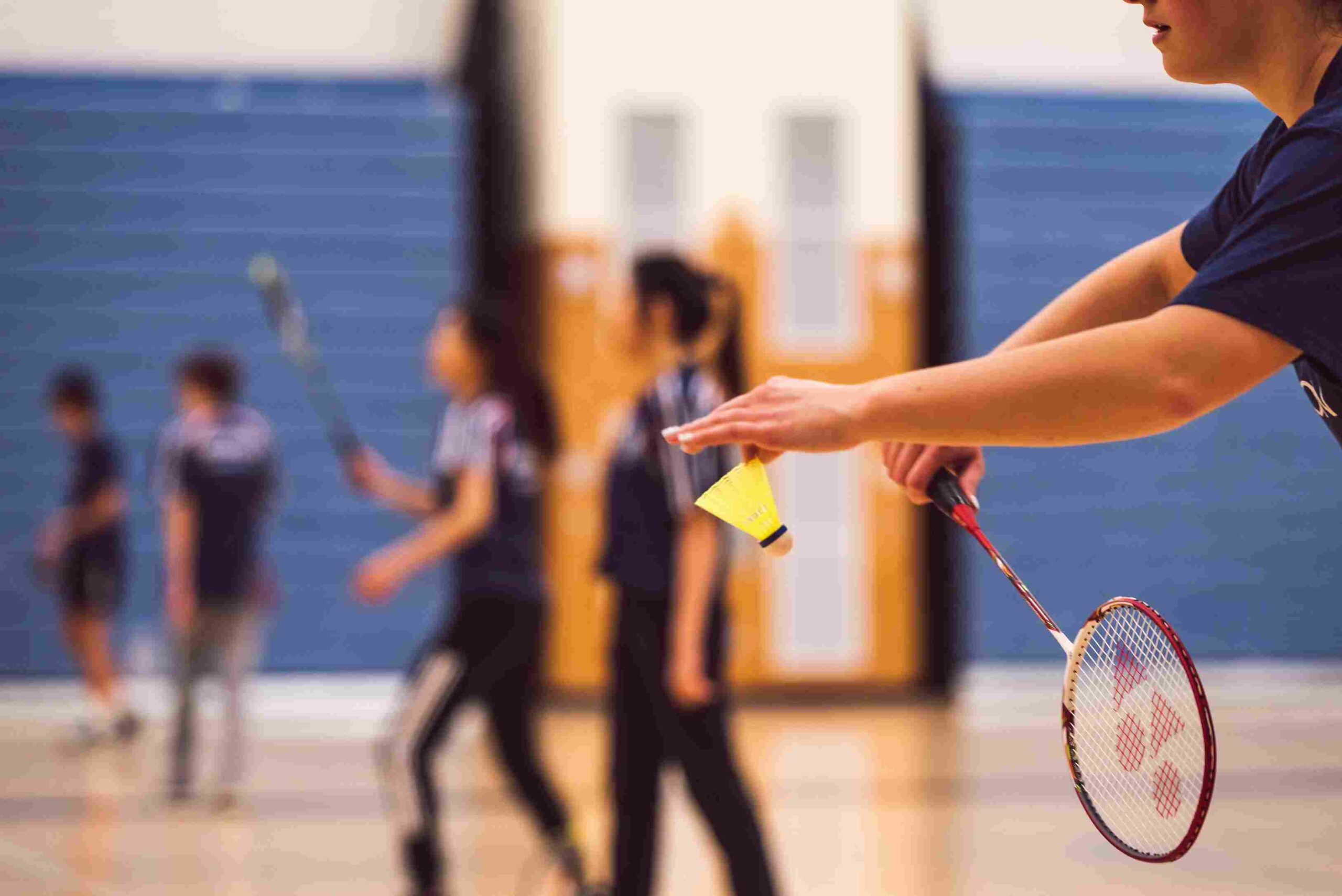
For us this goes beyond physical education, which, by the way, were you one of those who loved it or hated it? Sport in the Lycée Français Molière de Saragossa is much more than just physical activity: it is an essential tool for the holistic development of pupils. It helps to promote health, coordination, teamwork and the acquisition of values such as effort, solidarity and respect.

From nursery to baccalaureate, at our Lycée, sport is integrated into academic and social education, helping pupils to grow up aware of the importance of healthy habits in the different areas of their lives.

Benefits of sport in childhood: coordination, balance and socialisation

And yes, sport is for everyone. From the first years of kindergarten, pupils participate in psychomotricity sessions designed to improve coordination, balance and body awareness. These early activities not only reinforce physical development, but also teach notions of space, time and cooperation, which are later applied in academic learning and daily living.

In addition, the Lycée offers numerous extracurricular activities so that pupils can continue to explore different sporting disciplines, discover new interests and enjoy exercise in a fun and motivating environment. These proposals complement classroom training and reinforce values such as cooperation, effort and self-improvement.

Sporting events at the Lycée français Molière

Sport at the Lycée is not limited to the classroom. The school projects and competitions are a key part of the educational experience and reinforce cohesion and shared values. In the French International School of Zaragoza we do a lot of activities every year:

Races and sporting challenges that educate in values

La Course contre la Faim is an action that we carry out from infant to primary school and combines physical activity with the values of solidarity and social commitment. The Cross of the Petit Molière and the Course pour la Science encourage coexistence, motivation and the discovery of new disciplines, promoting shared effort and personal improvement.

More importantly, the trilingual approach of the Lycée is present in all activities as pupils collaborate and communicate in a variety of ways. several languages, The programme is designed to reinforce social and communication skills that will be essential throughout their academic life.

Continuity of sport outside the classroom

The extra-curricular activities organised by the Parents' Association allow pupils to play sport in a playful way, explore new disciplines and strengthen cohesion within the Lycée community. In this way, sport becomes a fun and vital element in their day-to-day lives, as well as generating healthy lifestyle habits and a sense of belonging. positive attitude towards physical activity.

Sport and academic education: the perfect combination

In the French education system, physical education is part of the baccalauréat assessment. Students are valued not only for their physical abilities, but also for their ability to work as part of a team, respect rules and manage their effort. This shows that sport is considered as important as academic subjects, contributing to the overall development of the student.

In case there was any doubt, sport at the Lycée Français Molière in Saragossa is a essential educational tool as it not only helps to take care of the body, but also forms part of the integral education of each student, preparing them to face the challenges of the future with confidence and motivation.